UK Antiques UK Antiques

Historical Cabinet Master Craftsmen (The "Big Three" and Beyond)
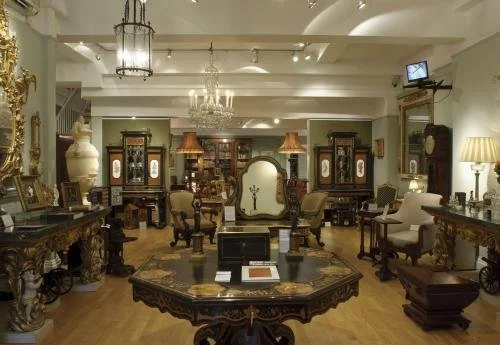
UK Antiques

Historical Master Craftsmen (The "Big Three" and Beyond)

These are the titans of classic furniture design. Profiling them offers a great dive into the history of woodworking and antique styles.

  • Thomas Chippendale (1718–1779): Arguably the most famous name in English furniture history. His book, The Gentleman and Cabinet-Maker's Director, revolutionized furniture design by cataloging Rococo, Gothic, and Chinese-influenced styles.

  • George Hepplewhite (1727–1786): Known for lighter, more elegant neoclassical designs compared to Chippendale. He popularized the shield-back chair and the use of contrasting veneers and inlays.

  • Thomas Sheraton (1751–1806): The last of the great 18th-century English furniture makers. His style is characterized by strict neoclassical lines, rectangular forms, and a preference for satinwood.

  • André-Charles Boulle (1642–1732): The preeminent cabinet maker for King Louis XIV of France. He is legendary for "Boulle work"—an incredibly intricate marquetry technique using tortoiseshell, brass, and pewter.

  • Duncan Phyfe (1770–1854): One of America's leading 19th-century cabinet makers. He brought European neoclassical styles to New York and adapted them into a distinct American federal style.

20th Century Visionaries (Arts & Crafts to Mid-Century)

If your blog leans more toward modern woodworking, craftsmanship, or organic design, these makers are fantastic to feature.

  • Gustav Stickley (1858–1942): A leading figure in the American Arts and Crafts movement. His "Craftsman" style furniture emphasized simple, sturdy, unadorned oak designs with exposed joinery (like mortise and tenon), pushing back against the fussy Victorian era.

  • George Nakashima (1905–1990): A Japanese-American woodworker who pioneered the use of "live edge" wood. He celebrated the natural imperfections of the wood, using butterfly joints to stabilize cracks. His philosophy of giving a tree a "second life" is a beautiful angle for a blog post.

  • Sam Maloof (1916–2009): A legendary American studio furniture maker, most famous for his exquisitely sculpted wooden rocking chairs. His work is defined by its tactile, flowing lines and the phrase "woodworker" rather than artist or designer.

  • Hans Wegner (1914–2007): A driving force behind "Danish Modern" design. While often classified as a designer, he was a master cabinet maker who deeply understood joinery and wood properties, resulting in iconic pieces like the "Wishbone Chair."

Read More
UK Antiques UK Antiques

Queen Anne Silver

Queen Anne silver refers to a style of English silverware made during the reign of Queen Anne (1702–1714). It’s one of the most elegant and collectable periods in antique silver.

What it looks like

Queen Anne silver is known for its refined simplicity compared to earlier, more ornate styles. Key features include:

  • Plain, smooth surfaces with minimal decoration

  • Elegant proportions and balanced shapes

  • “Rat-tail” spoons (a ridge strengthening the bowl handle join)

  • Octagonal or tapering forms (especially tankards and mugs)

  • Subtle engraving rather than heavy embossing

Britannia standard

One of the most important things about Queen Anne silver is the use of the Britannia silver standard:

  • 95.8% pure silver (higher than modern sterling at 92.5%)

  • Introduced to discourage melting coins

  • Marked with a figure of Britannia instead of the lion passant

This makes genuine Queen Anne pieces softer and slightly warmer in tone than later sterling silver.

Common items

Typical pieces you’ll find include:

  • Tankards (very popular in this period)

  • Porringers (small bowls with handles)

  • Casters (for sugar/spices)

  • Spoons and early forks

  • Tea wares (as tea drinking became fashionable)

Why collectors love it

  • It represents a transition to modern design

  • Pieces are over 300 years old

  • High silver purity adds value

  • Craftsmanship is subtle but extremely refined

Value (rough guide)

Prices vary widely depending on maker, condition, and rarity:

  • Small items (spoons, etc.): £100–£500+

  • Tankards or larger pieces: £2,000–£20,000+

  • Rare or museum-quality items: much higher

Read More
UK Antiques UK Antiques

Liberty & Co


Liberty Silver

Liberty & Co.


Liberty & Co. (often just called Liberty) is a famous British luxury brand and historic department store known for its distinctive style and high-quality design.

📜 A quick history

  • Founded in 1875 by Arthur Lasenby Liberty

  • Located on Regent Street, London

  • Became famous for importing exotic goods from Japan, Persia, and India

  • Helped popularise the Art Nouveau movement in Britain

🎨 What they’re known for

1. Iconic fabrics

  • Floral, paisley, and intricate prints

  • Still widely used in fashion and interiors today

2. “Cymric” silver & metalwork

  • Designed in the late 1800s

  • Often by Archibald Knox

  • Features:

    • Celtic-inspired patterns

    • Handcrafted look

  • Highly collectable antiques

3. Furniture & decorative arts

  • Arts & Crafts and Art Nouveau styles

  • Unique, artistic designs rather than mass-produced items

🏛️ The famous store

  • The current building (opened 1924) is made from old ship timbers

  • Known for its Tudor-style exterior and wooden interior galleries

  • Still operating today as one of London’s most distinctive shops

💡 Why “Liberty & Co.” matters in antiques

If you see “Liberty & Co.” stamped on an item, it usually means:

  • It’s late 19th / early 20th century

  • Designed in Art Nouveau or Arts & Crafts style

  • Often more valuable than generic antiques

Read More
UK Antiques UK Antiques

What is "Art Deco"

Art Deco is a design style that emerged in the 1920s and 1930s, known for its bold geometry, rich materials, and sense of modern luxury. It touched everything—from buildings and furniture to fashion, jewelry, and graphic design.

Origins

The style takes its name from the Exposition Internationale des Arts Décoratifs et Industriels Modernes, a major exhibition in Paris that showcased a new, forward-looking aesthetic. It spread globally during the interwar period.

Key Characteristics

Art Deco is easy to recognize once you know what to look for:

  • Geometric shapes: zigzags, chevrons, sunbursts, and stepped forms

  • Symmetry: balanced, orderly designs

  • Luxurious materials: chrome, glass, ivory, lacquer, exotic woods

  • Bold colors: deep blacks, golds, jewel tones

  • Streamlined forms: influenced by machines, speed, and progress

Famous Examples

  • The Chrysler Building in New York is one of the most iconic Art Deco skyscrapers, with its gleaming, layered crown.

  • The Empire State Building also reflects the style in a more restrained way.

Art Deco vs. Other Styles

  • Art Nouveau (earlier): flowing, organic lines inspired by nature

  • Art Deco: sharp, geometric, machine-inspired

  • Mid-century modern (later): simpler, more functional, less decorative

Why It Still Matters

Art Deco continues to influence modern design—especially in luxury goods (like brands such as Asprey), architecture, and interiors—because it represents a moment when craftsmanship met modernity.

Read More
UK Antiques UK Antiques

"Asprey" What is it, Who is it

Asprey is one of Britain’s oldest and most prestigious luxury brands, known for its craftsmanship, heritage, and royal connections.

Founded in 1781 in London, Asprey began as a silk-printing business before evolving into a high-end retailer of jewelry, leather goods, silverware, watches, and gifts. Over time, it became synonymous with British elegance and discretion—serving aristocracy, heads of state, and celebrities.

Heritage & Royal Ties

Asprey holds a Royal Warrant, meaning it has officially supplied goods to the British royal family. Historically, it has served monarchs including Queen Victoria and more recently members of the modern royal household. Its long-standing association with royalty reinforces its reputation for exceptional quality.

What Asprey Is Known For

  • Fine jewellery – Diamond pieces, engagement rings, and statement designs

  • Leather goods – Handcrafted bags, wallets, and travel accessories

  • Silverware – Traditional British luxury items like tea sets and trophies

  • Watches & gifts – Often bespoke or limited-edition

Each item is made with an emphasis on craftsmanship, durability, and understated luxury rather than flashy branding.

Bond Street Flagship

Asprey’s flagship store on New Bond Street in London is a landmark for luxury shopping. It’s not just a retail space—it reflects the brand’s identity, blending tradition with contemporary design.

Position in Modern Luxury

Unlike brands such as Gucci or Louis Vuitton that focus heavily on fashion trends and logos, Asprey leans toward timeless, quiet luxury—appealing to clients who value heritage and craftsmanship over visibility.

Asprey Silver
Read More
UK Antiques UK Antiques

Assay Offices

Assay Offices of Britain

Birmingham

Assay Office London

Assay Office Birmingham was established by Act of Parliament and was opened in 1773.  Its Mark is an Anchor, which can be combined with a Sponsor’s Mark, a Fineness Mark, a Traditional Mark (e.g. Lion Passant), a Date Letter, and a Duty Mark. During the 20th Century, the Anchor was placed upright for silver. Earlier practice could vary. From 1999 it is on its side. The Anchor is the symbol of The Birmingham Assay Office. When you see the Anchor on any silver item, you know it has been tested at the world’s largest assay office.

Chester

Chester is a shield bearing the town’s arms, a sword and three sheaves of wheat. Chester was granted an official Assay Office by an Act of Parliament in 1700. Its marks were similar to those of London hallmarked silver and the sequence of date letters followed in alphabetical order. The Chester assay office closed down in 1962.

Edinburgh

The town mark of Edinburgh is a three towered castle.  This mark was seen with a maker’s mark and the deacon’s mark up until 1681 when an assay master was appointed and a date letter system was also introduced.  Since 1759 until 1974 Scottish silver, like gold bears a thistle mark. On 1 January 1975 the thistle was replaced by a rampant lion. Between 1819 and 1964 a second assay office also operated in Glasgow.

Exeter

The assay office officially opened in 1701 when a date letter system was initiated. The town mark a castle with three turrets looks very similar to that of Edinburgh, but can be differentiated by the existence of the Britannia Mark and the Lion’s Head erased. After 1721 this changed to the Leopard’s Head and the Lion Passant in square shields. The Exeter Assay office closed down in 1883.

Glasgow

The Glasgow Assay Office was established in 1819. A date letter was used on wrought silver from 1681 to 1710 then discontinued until 1819. During this time the letters "S" (sometimes reversed), "E","F" and "O" were used. The date letter, which followed a 26 year cycle, was changed annually in July. Items were produced in Glasgow since the 17th Century and marked in a similar manner to those in other Scottish Provincial towns. The town mark is a tree, a fish and a bell. The Assay Office closed in 1964.

Ireland

Dublin - The Dublin Assay Office was established in 1637 to supervise the assaying of all gold and silver throughout the whole of Ireland. Originally, hallmarks consisted of the goldsmiths' proper mark which was the maker's mark originally used to identify the silversmith or goldsmith responsible for making the article. The fineness mark, the harp crown was applied to 22 carat gold and sterling silver along with the date letter.  In 1773 the figure of Hibernia was added.

London

The Assay Office London is a key part of the Goldsmiths’ Company, one of the Twelve Great Livery Companies of the City of London. It was founded to regulate the trade of the goldsmith, and was responsible since 1327 for testing the quality of gold, silver, and latterly platinum and palladium articles. The word 'hallmark' originates from the fifteenth century when London craftsmen were first required to bring their artefacts to Goldsmiths' Hall for assaying and marking.

Originally, articles received the King’s mark of authentication which was the mark of a leopard’s head. In 1544 the Goldsmith’s Company adopted the King’s mark as their town mark and the leopard’s head is now recognised as the mark of the Assay Office London.

Newcastle

Newcastle was granted an official Assay Office by an Act of Parliament in 1700 when its official date lettering system commenced. The Newcastle town mark was three castles, two on top and one below. From 1720 an additional mark, the leopard’s head crowned, was added. The assay office closed down in 1884.

Norwich

Assay Marks for Norwich origin was a Castle surmounting a Lion Passant used with a date letter and a maker’s mark. In the first quarter of the 17th Century a Seeded Rose Crowned was added as a further Town mark. During the last half of the Century this was changed to a Rose with a stem. The Norwich assay office closed in 1702.

Sheffield

The Sheffield Assay Office was established by Act of Parliament and was opened in 1773.  Originally, only silver produced within twenty miles of Sheffield could be marked at the office. From 1784, Sheffield was empowered to keep a register of all makers marks within one hundred miles.

Until 1974, the mark of origin on silver was the Crown. The date letters began in 1773 with the letter E, and were varied irregularly each year until 1824, after which date they were arranged in alphabetical order. In 1974, Sheffield's mark was changed to the Yorkshire Rose, and it became the last office to standardise its date letters.

York

Assaying in York during the 16th Century was a town mark was half fleur-de-lys and half leopard head. This was used with a sequence of date letters and makers marks. Towards the end of the 17th Century the half Leopard’s Head was replaced with a Half Seeded Rose. The first assay office was closed down in 1700, only to be re-opened by Act of Parliament in 1701. The assay office had a new symbol, of a St. George’s cross charged with five lions passant, however the office closed down again in 1714.

The York Assay Office re-opened for a final time in 1778. The St. George’s cross charged with five lions passant mark was revived, this mark together with the lion passant, leopard’s head, date letter, markers’ mark and from 1784 the duty mark leads to a very crowded item with a possible six marks. The York assay office closed down completely in 1858.

Read More
UK Antiques UK Antiques

Silversmiths

Some helpful details about silversmiths

what is a silversmith

A silversmith is a craftsperson who works with silver to create, shape, and decorate objects. This can include everything from jewellery and cutlery to decorative items like bowls, teapots, and candlesticks.

What silversmiths do

Silversmiths use a mix of traditional hand tools and modern equipment to:

  • Melt and shape silver into desired forms

  • Hammer, bend, and solder pieces together

  • Engrave or emboss decorative patterns

  • Polish finished items to a high shine

Types of silversmithing

  • Jewellery making – rings, necklaces, bracelets

  • Hollowware – larger items like teapots, bowls, and cups

  • Flatware – forks, knives, and spoons

  • Decorative art – sculptures or ornamental pieces

Historic UK silversmiths (17th–19th century)

  • Paul Storr – one of Britain’s greatest, worked for royalty

  • Hester Bateman – elegant, accessible Georgian designs

  • Paul de Lamerie – master of ornate Rococo silver

  • Omar Ramsden – hand-crafted revival style pieces

  • Robert Garrard – linked to royal commissions

  • Paul Crespin – early 18th-century excellence

Major UK silversmith companies & firms

  • Mappin & Webb – iconic Sheffield and London maker

  • Garrard & Co – royal silversmiths since 18th century

  • Elkington & Co – revolutionised silver production

  • Asprey – high-end silver and gifts

  • Walker & Hall – well-known Victorian firm

  • Goldsmiths & Silversmiths Company – major 19th-century retailer

Modern & contemporary UK silversmiths

  • Jocelyn Burton – combines sculpture and silver

  • Malcolm Appleby – highly detailed engraving work

  • Rod Kelly – modern handcrafted vessels

  • Brett Payne – traditional skills and education

  • Clive Burr – contemporary handmade pieces

Key UK silversmithing centres

  • London – historic hub (Goldsmiths’ Company, assay office)

  • Sheffield – industrial silver production

  • Birmingham – jewellery quarter and mass manufacture

Silversmith
Read More
UK Antiques UK Antiques

How to read a hallmark

Reading a silver hallmark is like decoding a little identity card stamped into the metal. Once you know what to look for, you can tell what it’s made of, where it was assayed, who made it, and even the year.

🔍 What a Typical Hallmark Looks Like

A full (traditional UK) hallmark usually has 4–5 symbols in a row:

  1. Maker’s mark – who made it

  2. Purity mark – how much silver it contains

  3. Assay office mark – where it was tested

  4. Date letter – the year it was hallmarked

  5. (Optional) Duty mark – a tax mark (older pieces only)

🪙 1. Purity (What the Silver Is Made Of)

This is often the easiest to recognise:

  • “925” → Sterling silver (92.5% pure)

  • “958” → Britannia silver (higher purity)

  • A lion passant (walking lion) → traditional UK sterling standard

👉 If you see EPNS (Electroplated Nickel Silver), it’s not solid silver—just plated.

🏛️ 2. Assay Office (Where It Was Tested)

Each UK city has its own symbol:

  • Anchor → Birmingham

  • Leopard’s head → London

  • Castle → Edinburgh

  • Rose → Sheffield

This tells you where the silver was officially checked.

🏷️ 3. Maker’s Mark (Who Made It)

  • Usually initials inside a shape (e.g., “T & Co” or “JS”)

  • The shape of the stamp (oval, shield, rectangle) also matters

  • You can look these up in hallmark databases to identify the silversmith

📅 4. Date Letter (When It Was Made)

  • A single letter (e.g., “a”, “B”, “q”)

  • The font and shape around it change every year

  • Each assay office has its own cycle

👉 You usually need a chart to match the exact year.

👑 5. Duty Mark (Older Pieces Only)

  • A small profile of a monarch (e.g., King George III)

  • Shows tax was paid on silver (used 1784–1890)

🧠 Putting It All Together

If you had a spoon marked:

  • Lion passant → sterling silver

  • Anchor → Birmingham

  • “JH” → maker

  • Date letter “g” → specific year from chart

👉 You could say: “This is a sterling silver spoon, assayed in Birmingham, made by JH in [year].”

⚠️ Quick Tips

  • Hallmarks are often tiny—use a magnifying glass

  • They may be worn or partially missing on antiques

  • Not all countries use the same system (UK is one of the most detailed)

Silver Hallmarks
Read More
UK Antiques UK Antiques

What is Antique Silver

Antique Silver: what it actually means

Antique silver refers to silver objects that are at least 100 years old. These items were usually made for practical or decorative use—things like cutlery, teapots, candlesticks, or jewellery—and have survived long enough to become collectable.

🕰️ How old is “antique”?

  • Generally, an item must be 100+ years old to be called an antique.

  • So today, that includes silver from periods like:

    • Georgian (1714–1830)

    • Victorian (1837–1901)

    • Early Edwardian (1901–1910)

🧪 What is it made of?

Most antique silver isn’t pure silver. Instead, it’s usually:

  • Sterling silver (92.5% silver, 7.5% other metals like copper)

  • Occasionally coin silver (slightly lower purity, common in older pieces)

🔍 How to recognise antique silver

1. Hallmarks

  • Small stamped symbols that tell you:

    • Purity

    • Maker

    • Year and place of manufacture

  • British silver often has very detailed hallmark systems.

2. Craftsmanship

  • Often handmade or hand-finished

  • Fine engraving, chasing, or embossing

3. Patina

  • A soft, darker tone that forms naturally over time

  • Unlike dirt, this is valued and usually not polished away completely

💰 Why people collect it

  • Historical value – each piece reflects its era

  • Artistry – often more detailed than modern mass production

  • Investment – value can increase over time

⚠️ Not the same as…

  • Vintage silver: typically 20–99 years old

  • Silver-plated items: only a thin layer of silver over another metal (less valuable)

In short

Antique silver is real silverware or objects over a century old, prized for their craftsmanship, history, and character—especially the unique marks and patina they develop over time.

Antique Silver
Read More
UK Antiques UK Antiques

What is silver

Silver: a simple explanation

silver

Silver is a chemical element—a naturally occurring metal known for its bright, shiny appearance and excellent conductivity.

  • Symbol: Ag

  • Element type: Metal

  • Position in science: Part of the Periodic Table

🔬 What makes silver special?

  • It’s the best conductor of electricity and heat of any metal.

  • Very malleable and ductile (can be shaped easily).

  • Has a distinctive bright white shine (high reflectivity).

🪙 Where does silver come from?

Silver is found in the Earth’s crust, often mined from ores alongside other metals like lead or copper. It has been used by humans for thousands of years.

💍 Common uses

  • Jewellery & cutlery (what people often call “silverware”)

  • Coins and investment bars

  • Electronics (because it conducts electricity so well)

  • Mirrors and coatings (because it reflects light efficiently)

  • Medical uses (it can kill bacteria)

⚠️ A small detail

Pure silver is quite soft, so it’s often mixed with other metals (like copper) to make it stronger—this is called an alloy (e.g., sterling silver).

In short

Silver is a valuable, shiny metal that’s been used for money, decoration, and technology for thousands of years—and is still important today.

Read More
UK Antiques UK Antiques

Edwardian Period

The Edwardian Period (1901–1910)

The Edwardian period spans 1901 to 1910, during the reign of Edward VII. It followed the long Victorian era and is often seen as a lighter, more relaxed time—though it sat right on the edge of huge global change.

🏛️ Politics and Society

  • Britain remained a major world power, but tensions were rising in Europe.

  • The rigid moral tone of the Victorian age softened—society became more social, fashionable, and outward-looking.

  • However, class divisions still existed, and calls for reform grew louder.

  • Movements like women’s suffrage gained strength, led by figures such as Emmeline Pankhurst.

🌍 A World on the Brink

  • The period is often remembered as a calm before the storm of the World War I.

  • International rivalries, alliances, and arms races were intensifying behind the scenes.

  • The end of the Edwardian era blends into the early reign of George V.

🎨 Culture and Lifestyle

  • The wealthy enjoyed a glamorous lifestyle—garden parties, balls, and travel.

  • Leisure expanded with seaside holidays and sports.

  • Early cinema and new forms of entertainment began to emerge.

  • The Art Nouveau style influenced design, favoring flowing lines and natural forms.

🏠 Architecture and Design

  • Edwardian homes were often lighter and less cluttered than Victorian ones.

  • Influenced by the Arts and Crafts movement, emphasizing craftsmanship and simplicity.

  • Suburban housing expanded as transport improved.

⚙️ Technology and Change

  • Rapid technological progress continued:

    • Cars became more common.

    • Electricity spread to homes and streets.

  • Communication and travel were improving quickly, shrinking distances.

👗 Fashion

  • Fashion became more elegant and less restrictive than Victorian styles:

    • Women wore lighter dresses with the “S-bend” silhouette.

    • Men favored tailored suits and a polished look.

  • Clothing reflected a more relaxed social atmosphere.

In short

The Edwardian period was a brief, elegant transition between the strict Victorian age and the upheaval of the 20th century—a time of optimism, refinement, and underlying tension before dramatic global change.

Edwardian
Read More
UK Antiques UK Antiques

Victorian Period

The Victorian Period (1837–1901)

The Victorian period covers the reign of Queen Victoria from 1837 to 1901. It followed the Georgian era and is often associated with strict social values, rapid industrial growth, and the height of the British Empire.

🏛️ Politics and Empire

  • Britain became the world’s dominant global power, controlling vast territories across Africa, Asia, and beyond.

  • The empire reached its peak after the Indian Rebellion of 1857, which led to direct Crown rule in India.

  • Victorian politics saw reforms expanding voting rights, though power still rested largely with the elite.

⚙️ Industry and Innovation

  • The Industrial Revolution accelerated dramatically.

  • Railways, steamships, and factories transformed how people lived and worked.

  • New technologies like the telegraph enabled near-instant communication.

  • Cities like Manchester and Birmingham grew rapidly as industrial hubs.

👨‍👩‍👧 Society and Daily Life

  • Victorian society was marked by strict moral codes—often referred to as “Victorian values.”

  • There was a strong emphasis on family, respectability, and social order.

  • However, stark inequality existed:

    • Wealthy families lived in comfort.

    • The poor often endured overcrowded housing and dangerous working conditions.

  • Social reform movements began addressing poverty, child labor, and public health.

🎨 Culture, Literature, and Science

  • Literature flourished with writers like Charles Dickens, who highlighted social issues.

  • Charlotte Brontë and Thomas Hardy explored themes of love, class, and fate.

  • Charles Darwin published On the Origin of Species, revolutionizing science and challenging religious beliefs.

🏠 Architecture and Design

  • Victorian architecture was ornate and decorative, often inspired by Gothic styles.

  • Iconic structures include the Palace of Westminster (rebuilt in Gothic Revival style).

  • The Great Exhibition showcased industrial and cultural achievements.

👗 Fashion and Lifestyle

  • Early Victorian fashion featured large skirts (crinolines) and formal menswear.

  • Later years saw bustles and more tailored clothing.

  • Leisure activities included theatre, reading novels, and seaside holidays.

In short

The Victorian period was an age of progress and contradiction—technological breakthroughs and empire-building alongside deep social inequality. It helped shape modern cities, science, and culture in ways still visible today.

Victorian
Read More
UK Antiques UK Antiques

Georgian Period

The Georgian Period (1714–1830)

The Georgian period in Britain spans from 1714 to 1830, named after four monarchs: George I, George II, George III, and George IV. It was a time of major transformation in politics, culture, science, and society.

🏛️ Politics and Society

  • Britain evolved into a more stable constitutional monarchy, with Parliament gaining power.

  • The era saw the expansion of the British Empire across North America, India, and beyond.

  • Major events include the American Revolution and the Napoleonic Wars.

  • Society was highly stratified, with a clear divide between aristocracy, middle class, and working poor.

🎨 Culture, Art, and Literature

  • The arts flourished, with painters like Thomas Gainsborough.

  • Writers such as Jane Austen captured social life and manners.

  • The rise of novels, newspapers, and coffeehouse culture spread ideas widely.

🏠 Architecture and Design

  • Georgian architecture is known for symmetry, proportion, and elegance.

  • Influenced by classical Greece and Rome, often called Neoclassical style.

  • Iconic examples include the Royal Crescent in Bath.

🔬 Science and Innovation

  • This was the age of the Enlightenment, emphasizing reason and knowledge.

  • Figures like Isaac Newton (late 17th–early 18th century influence) shaped scientific thinking.

  • Advances in engineering and industry laid groundwork for the Industrial Revolution.

⚙️ Industry and Economy

  • Britain became the world’s first industrialized nation.

  • Innovations like James Watt’s steam engine revolutionized production.

  • Urbanization increased as people moved to cities for factory work.

👗 Daily Life and Fashion

  • Fashion was elaborate, especially among the wealthy—powdered wigs, waistcoats, and gowns.

  • Tea drinking, social visits, and public entertainment (like theatre) were central to daily life.

  • However, poverty and harsh working conditions were common for the lower classes.

In short

The Georgian period was a bridge between early modern and modern Britain—a time of elegance and inequality, innovation and upheaval, laying the foundations for the modern world.

Georgian silver
Read More